
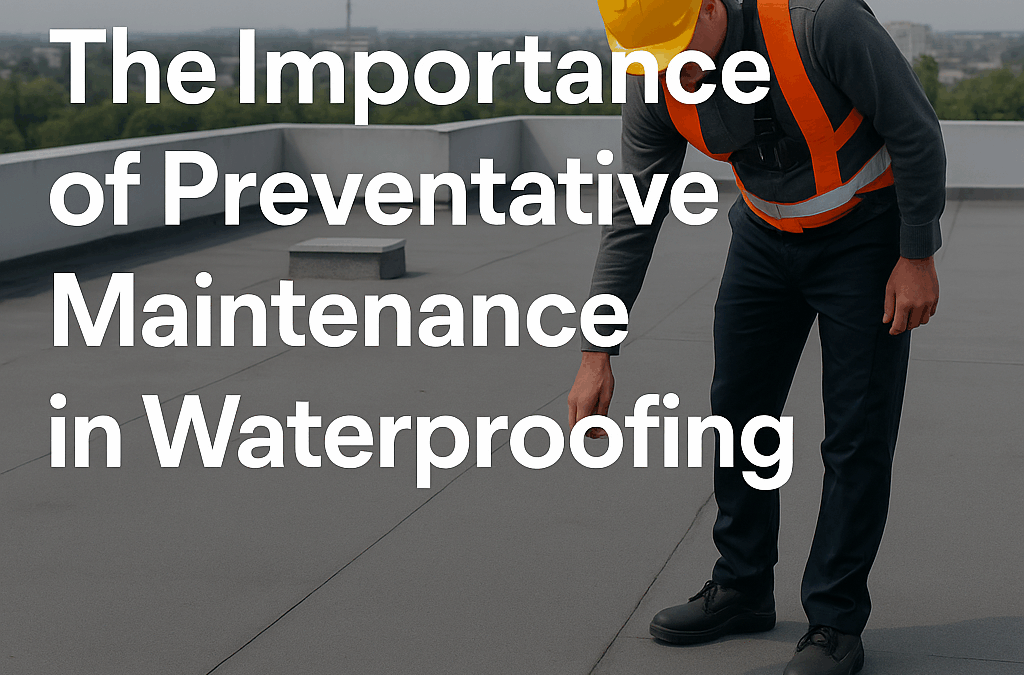
The Importance of Preventative Maintenance in Waterproofing
Every commercial building is quietly fighting a battle against water intrusion and decay. Facility managers know that a small leak today can turn into major damage tomorrow. In fact, aside from gross structural design errors, an estimated 90% of building problems are associated with unwanted moisture ingress. Preventative waterproofing maintenance is about getting ahead of those issues – fixing little problems before they become big, costly headaches. This proactive approach doesn’t just save money in the long run; it also protects the safety, value, and lifespan of your property.
Why Proactive Waterproofing Maintenance Saves Money
Water is one of the most destructive forces for buildings. A minor roof leak or hairline foundation crack might seem insignificant today, but given time, water can exploit these openings and cause extensive damage. This includes rotting of wood structural elements, corrosion of metal components, mold growth, deterioration of finishes, and even compromised structural integrity. The cost of repairing major water damage – replacing walls, ceilings, equipment, and performing mold remediation – far exceeds the small expense of periodic maintenance. Studies consistently show that an “ounce of prevention” is worth a pound of cure: every ten rand invested in preventive maintenance can save around 80- 100 rand in future repair costs. In terms of return on investment, that’s a 400-500% ROI achieved by avoiding emergency repairs and catastrophic failures.
Beyond direct repair bills, consider the hidden costs of water problems in commercial buildings. Water damage can disrupt business operations, force tenant relocations, ruin inventory, or even shut down facilities for days. Lost productivity and revenue, unhappy tenants, and higher insurance premiums are common side effects of a major leak or flood. Preventative maintenance helps you avoid these scenarios. By keeping moisture out and critical areas sealed, you avert the unplanned downtime and business losses that come with major water incursions. It is much cheaper (and far less stressful) to schedule a planned fix today than to deal with an unplanned disaster tomorrow. For example, resealing a roof before the rainy season might cost a small sum now, but it can prevent the far greater expense of replacing water-damaged drywall, carpet, and electronics later on. In short, small upfront fixes protect you from huge downstream costs.
Industry data and facility management research back this up. A nationwide analysis of public facilities found that cutting back on preventive maintenance to “save money” actually led to much higher costs in the long term: more frequent breakdowns, expensive emergency repairs, and earlier failure of building systems. In contrast, organisations that prioritize routine maintenance see fewer surprise failures and more predictable budgeting. The bottom line is clear – spending a little on waterproofing maintenance today can save exponentially more in avoided damage and repairs over the building’s life.
Key Preventive Maintenance Measures for Waterproofing
Preventative maintenance in waterproofing largely comes down to regular inspections and minor fixes that keep water out. These tasks aren’t glamorous, but they are absolutely vital for preserving the building envelope. By addressing tiny points of failure early – a clogged drain, a cracked seal, a loose flashing – you can stop water intrusion before it starts. Here are some typical maintenance tasks and why they matter:
- Clear roof drains and gutters routinely: Debris buildup on flat roofs or in gutter systems causes water to pond. Standing water will eventually find a way through seams or cracks, leading to leaks. Simply removing leaves, trash, and dirt every few months ensures rainwater flows off the building as intended rather than seeping inside. Keeping drainage paths clear is one of the easiest and most cost-effective ways to prevent roof leaks.
- Reseal joints, penetrations, and flashings: The seams and penetrations in roofs and walls (around HVAC units, vents, skylights, parapets, windows, etc.) are common weak spots for water entry. Over time, caulking and sealant materials dry out, crack, or separate. By regularly re-caulking joints and repairing or replacing deteriorated flashings, you maintain a watertight barrier at these critical points. A few rands’ worth of sealant applied proactively can prevent a major roof or window leak that might cost thousands to remediate.
- Inspect for hairline cracks and damage: Small cracks in concrete, masonry, or roof membranes can widen with weather and time, eventually admitting water. Regular inspection of roofs, walls, and foundations will catch these early. Filling a tiny crack, patching a pinhole, or applying a touch-up coating is quick work – whereas letting it go could result in water infiltration that weakens the structure. Proactive patching of minor damage significantly extends the life of the waterproofing system.
- Monitor indoor areas for leak signs: Often the first hints of a waterproofing issue appear inside. Stained ceiling tiles, peeling paint, bubbling drywall, or a musty odor can all be red flags of a hidden leak. If you or your staff notice a damp spot or moldy smell, investigate and address the source immediately rather than just repainting over it. Fixing a tiny leak now is far cheaper and easier than dealing with extensive mold remediation later. In other words, don’t ignore the “canary in the coal mine” – a small water stain – as it usually means something needs repair in the envelope.
- Maintain roof coatings and surfaces: Many flat commercial roofs have protective coatings or membranes that degrade over time due to UV exposure and foot traffic. Scheduling periodic recoating or membrane touch-ups (every few years, as recommended by the manufacturer) will renew the waterproof layer and prevent pinhole leaks. For example, applying a fresh liquid-applied waterproofing membrane or reflective roof coating at regular intervals can add years of life to a roof. It’s much cheaper to renew a coating than to replace an entire roof section after water has penetrated.
- Check the building perimeter and foundations: Ensure that downspout extensions direct water away from the foundation and that landscaping or grading isn’t causing water to pool against the building. Clear any drains or basement stair drains. In below-grade areas like basements or parking garages, look annually for any wall cracks, damp spots, or efflorescence (white mineral deposits) which indicate moisture seeping through the concrete. If found, have these cracks sealed or injected by professionals before groundwater can exploit them. Keeping the base of your building dry is just as important as the roof.
- Document and plan: Keep a log of all inspections and maintenance performed. Note the date, what was checked, and any issues fixed. This running record helps you track recurring trouble spots (e.g. a gutter that clogs every spring) and plan future repairs or budgeting. Many property managers use a simple spreadsheet or maintenance management software for this purpose. The key is to make preventative waterproofing maintenance a scheduled, habitual activity – not a one-time project. Consistency is what delivers results.
A regular maintenance program encompassing the above tasks will dramatically reduce the risk of water intrusion incidents in commercial properties. In fact, a visible roof inspection with minor repairs will significantly lower the likelihood of moisture penetration and costly leaks, and will extend the useful life of the roof system. It’s the classic case of spending a little now to save a lot later. The few hours spent cleaning drains or sealing a gap could avert a catastrophe like a collapsed ceiling or flooded office suite. Beyond the savings, this also avoids the disruptions and safety hazards that major water damage can create.
Extending Structural Lifespan and Preserving Value
Every building naturally deteriorates over time – a process sometimes referred to as the “entropy” of constructed assets. Preventative maintenance is essentially a fight against that entropy. Nowhere is this more evident than in waterproofing: by staying ahead of leaks, you directly slow down the decay of roofs, walls, and foundations. Regular maintenance keeps moisture out and thereby extends the service life of the structure. Research by the U.S. Department of Energy suggests that consistent maintenance can extend the lifespan of a building’s roof by 30% or more. In practical terms, a commercial roof expected to last 20 years might last 26+ years instead, simply because issues are fixed before they have a chance to spread. Over an entire portfolio of properties, this extension of life translates to huge capital savings – fewer premature roof replacements and less frequent major renovations.
By scheduling routine check-ups and “tune-ups” for your building envelope, you ensure critical barriers like roof membranes, sealants, and coatings continue to perform year after year. This reduces the frequency of major overhauls and delays the need for expensive end-of-life replacements. A well-maintained, water-tight building will also age more gracefully and maintain its market value better than one plagued by chronic leaks. Buyers and tenants alike recognise the difference – a facility with dry, intact interiors and a sound roof is more attractive and commands better rents/sale prices than one with water stains and moldy odors. In essence, preventive waterproofing care protects your asset value as well as the physical structure.
Importantly, a dry building is also a healthy building. When moisture is kept under control, you avoid the conditions that lead to indoor mold and mildew. Occupants benefit from better indoor air quality and fewer issues like allergens or musty smells. Studies have found that people who spend time in damp, water-damaged buildings are more likely to report respiratory problems, allergies, and even asthma symptoms. By preventing leaks and moisture buildup, you are also safeguarding the health and comfort of the people living or working in the facility. This translates to lower absenteeism, fewer tenant complaints, and a more productive environment. In sectors like healthcare and hospitality, proactive waterproofing maintenance is especially critical to maintaining sanitary, safe conditions.
Finally, embracing preventive maintenance demonstrates foresight and professionalism. Building owners who consistently care for waterproofing show that they are committed to providing a safe, reliable facility. It reinforces your organization’s reputation for quality and responsibility. Rather than reacting to emergencies, you anticipate them – and prevent them. This not only preserves the building’s longevity but also protects your reputation and trustworthiness as a property manager or owner.
The Cost of Neglect: Risks of Ignoring Maintenance
What if you choose to defer or ignore waterproofing maintenance? The consequences can be severe, both financially and structurally. As noted earlier, deferring maintenance tends to multiply costs later. Minor issues that are left unaddressed will inevitably worsen. That hairline crack in the wall could expand and let in water, eventually requiring extensive facade repairs. A clogged roof drain that isn’t cleared can create ponding water; if the weight doesn’t cause a roof collapse, the water intrusion could still soak insulation and interiors, necessitating a costly teardown and replacement of materials. In short, neglecting routine upkeep sets the stage for expensive crisis management and sometimes even the early death of a building.
Water intrusion, in particular, can compromise structural elements if left unchecked. Consider a real-world cautionary tale: the Algo Centre Mall in Ontario, Canada. For years, this commercial building suffered from unchecked roof leaks and inadequate waterproofing. Water and road salt seeped through the rooftop parking deck, causing hidden corrosion in the steel framework below. In 2012, a portion of the deck suddenly collapsed, killing two people and injuring others. The official inquiry concluded that the collapse was the result of “continual and uninterrupted ingress of water…resulting in severe corrosion and eventual failure” of the steel structure. This tragedy underscores the ultimate risk of ignoring water problems – structural failure and loss of life. Most cases won’t be this extreme, of course, but even a localized ceiling collapse or mold outbreak can pose safety hazards and legal liabilities for building owners.
Beyond structural risks, neglecting waterproofing can lead to chronic mold infestations, pest problems (termites and insects love damp wood), and degradation of electrical/mechanical systems. Moisture can short out wiring or ruin HVAC equipment. Additionally, insurance companies may limit coverage or increase premiums if a loss is attributed to lack of maintenance. Warranties on roofing or waterproofing systems often require evidence of regular maintenance; if you can’t provide it, a manufacturer may refuse to honor a warranty claim for a leak. All of these consequences highlight that deferred maintenance is not truly a way to save money – it’s a high-stakes gamble that usually ends up costing far more in the long run.
Conclusion: A Proactive Approach Pays Off
Preventative maintenance in waterproofing is ultimately about foresight and disciplined facility management. It requires a bit of planning to schedule routine inspections and allocate budget for periodic fixes. Yet the payoff is enormous: this proactive approach more than covers its own costs over time – in saved money, saved time, and peace of mind. Instead of scrambling reactively to address leaks and water damage after the fact, you can rest easier (even on heavy rain days) knowing your building has a strong line of defense.
For building owners, facility managers, and engineers, investing in waterproofing maintenance is an investment in the long-term performance of your asset. It’s akin to getting regular oil changes for your car – a modest recurring expense that prevents much costlier failures down the road. By partnering with qualified waterproofing experts and following a consistent maintenance program, you can greatly extend the lifespan of your roofs, walls, and foundations well beyond the typical expectancy. You’ll avoid the common pitfalls of water damage that plague so many aging structures, and in doing so, protect both your bottom line and your building’s occupants.
In the end, keeping water out is always easier (and cheaper) than dealing with the damage after it gets in. A vigilant, preventative maintenance strategy for waterproofing is the smart, responsible way to protect your commercial building for the long haul. Your future self – and your balance sheet – will thank you for the foresight. An ounce of prevention is worth a pound of cure, especially when it comes to shielding your property from the relentless effects of water.