
Introduction:
Building cracks and water leaks are common issues, but not every crack or drip signals doom. Most structures eventually develop minor wall cracks from settling or temperature changes, and many of these are cosmetic The challenge for Gauteng’s facility managers is knowing which cracks or leaks might hint at structural or waterproofing problems. Below are ten tips , presented in a professional yet conversational tone , to help you assess whether that crack in the wall or damp spot on the ceiling warrants urgent action or just monitoring.
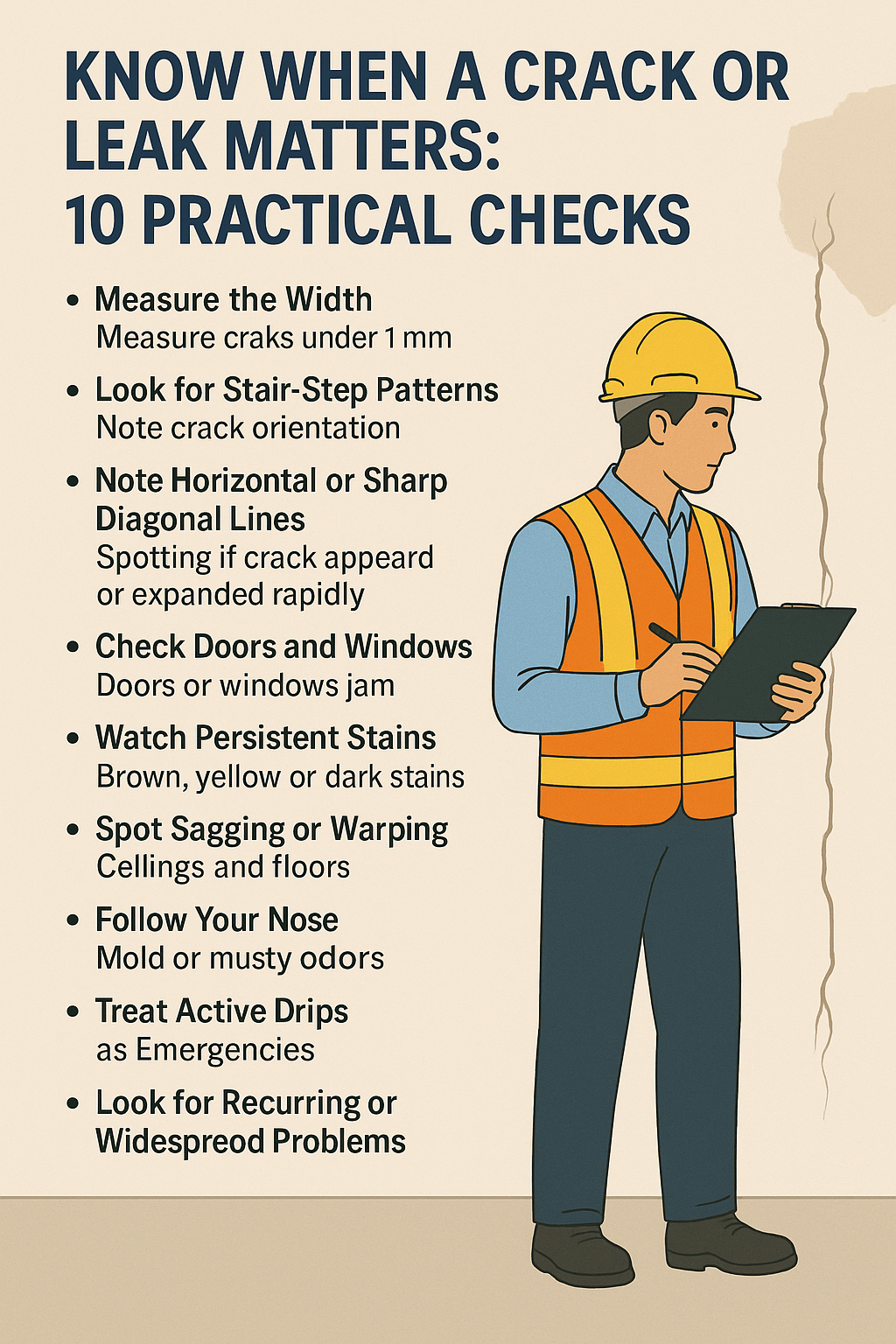
- Measure the Crack’s Width
Start by gauging how wide a crack is. Hairline cracks under ~1 mm often result from normal settling or plaster shrinkage and are usually harmless. However, cracks wider than about 5 mm (roughly the width of a pencil) are a red flag that could indicate structural movement. In fact, South Africa’s NHBRC guidelines classify cracks over 5 mm (up to 25 mm) as “significant damage,” while anything beyond 25 mm is major and signals potential instability. If a crack is wide enough to slip a coin into or see daylight through, it’s time to call a professional for assessment.
- Stair-Step Cracks in Brickwork
Take note of any cracks forming a zigzag or stair-step pattern along brick mortar lines. These usually indicate foundation movement or subsidence. They often start at corners of windows or doors and climb in a step-like fashion. Such cracks are especially concerning if you also notice uneven floors or doors and windows that suddenly stick shut, since those accompany shifting foundations. Stair-step cracking from foundation settlement or expansive clay soil should never be ignored , without intervention, it can rapidly worsen and undermine the wall’s stability.
- Horizontal or Diagonal Crack Lines
Pay attention to the crack’s orientation. Vertical cracks are relatively common and often benign, especially in plaster, but horizontal or sharply diagonal cracks tend to be more serious. A horizontal crack across a wall (for example, along a building’s foundation or near the ceiling) may suggest that lateral pressure is being applied , possibly from shifting soil or hydrostatic water pressure behind a wall. Diagonal cracks radiating from the corners of windows or door frames can mean the frame is moving due to structural settling or roof stress. If you see long horizontal or 45-degree cracks, consider it a warning sign of structural stress or water damage compromising the wall’s integrity.
- Sudden or Growing Cracks
Was that crack not there last month, or is it noticeably lengthening or widening over a short time? A crack that appears suddenly or expands rapidly over days or weeks is a serious warning sign. Rapid progression could be triggered by events like an earth tremor, nearby heavy construction, or failure of a supporting element (e.g. a retaining wall). Cracks that keep growing are rarely just superficial; active movement is likely ongoing in the structure. Mark the ends of the crack and date them, then watch for changes. If the crack’s length or width is increasing, don’t wait , have an engineer evaluate it. Fast-growing cracks should be addressed without delay.
- Doors or Windows Jamming
A crack by itself can be deceptive, so also check the surrounding elements. If a wall crack comes with doors or windows that suddenly won’t close properly or gaps appearing around frames, the building may be shifting. Sticking doors, jammed windows, or newly skewed frames often indicate foundation movement associated with the crack. In other words, the structure is out of plumb. One minor crack in plaster might not be serious, but if that crack is accompanied by misaligned doorframes or sloping floors, it points to an underlying structural issue. This combination of symptoms means the crack is likely more than cosmetic and warrants immediate professional inspection.
- Persistent Wall or Ceiling Stains
Not all leaks gush water; some quietly leave clues. Brown, yellow, or dark water stains spreading on ceilings or walls are classic signs of a leak that’s been active for some time. These discolored patches (often with a ringed “tidemark” appearance) mean water has been seeping through materials and depositing minerals or dirt. If you notice paint bubbling or wallpaper peeling in that area, that’s another hint of ongoing moisture behind the surface. Don’t assume a dry-looking stain is old news , without fixing the source, that stain can grow with the next rain or plumbing cycle. Any unexplained damp stain that continues to darken or expand is serious enough to investigate and repair.
Sagging or Warping Structures , Look for physical deformation caused by water. A ceiling that sags or has a bulge is a red-alert for a severe leak above. For instance, ceiling tiles bowing downward or gypsum plaster bulging could mean water is pooling on the other side. Similarly, warping wooden floors, bubbling paint, or crumbling drywall can result from a hidden chronic leak. These changes indicate the materials are soaked and losing integrity. If a ceiling is sagging under the weight of water or floorboards are buckling, the leak has already caused significant damage , immediate repair is needed before that section collapses or rots through.
- Mould or Musty Odors ,
Follow your nose as well as your eyes. A musty, damp smell in an area, or visible mould growth on walls or carpets, usually means water has been present for a while. Any crack that lets water in can lead to dampness and mould, which not only poses health risks but also weakens surrounding materials. Black or green patches of mould, or even a white powdery residue (efflorescence) on masonry, are signs of moisture seepage. Mold thrives in hidden damp places, so that faint mildew smell in a storeroom or crawl space could be the first clue of a serious leak behind the scenes. If you detect persistent damp odours or mildew, treat it as a warning to find and fix the water source before it undermines air quality and the building fabric.
- Active Drips and Puddles
This might sound obvious, but any ongoing water drip or unexplained puddle needs prompt attention. If you notice water actively dripping from a ceiling, pipe, or wall crack, or pooling on the floor without an apparent source, you likely have a significant leak. Don’t dismiss small intermittent drips; even a slow leak can soak into structural elements over time. Check if the leak correlates with rainfall (pointing to a roof or facade issue) or if it’s happening in dry weather (possibly a plumbing or HVAC leak). Unexplained water is never a good sign , left unchecked, it can escalate from a minor inconvenience to major structural damage or mold infestation. It’s best to stop the source and dry things out as soon as possible, rather than “wait and see.”
- Source of the Leak , Rain or Plumbing?
Determining where the water is coming from can tell you how urgent it is. Rain-related leaks (for example, water seeping through a roof or window during storms) often indicate a failure in waterproofing or drainage. These should be fixed promptly to avoid rot or erosion of building materials, especially with Gauteng’s intense summer storms. On the other hand, a leak unrelated to weather , say a wet patch that persists even on sunny days or a ceiling drip when it’s not raining , suggests a plumbing issue or groundwater ingress. A continuous plumbing leak (like a hidden burst pipe) is serious; it can dump a lot of water into cavities and even cause higher water bills or reduced pressure as clues. In both cases, the leak’s cause needs addressing, but an active plumbing leak might warrant shutting off water supply and emergency repair to prevent extensive flooding.
- Recurring or Widespread Problems ,
Lastly, consider the big picture. Is this an isolated crack or leak, or do you see a pattern? One small dry crack can be patched and monitored, but multiple cracks appearing or expanding across walls may signal an overall structural settlement or material failure. Likewise, if you’ve fixed a leak only for the dampness to return in the same spot, the underlying issue (be it a faulty membrane or pipe) was not resolved. According to expert guidelines, even a few moderate cracks (several over ~3 mm) should be treated as a potentially serious situation that merits professional investigation. Repeated cracking or leaking is essentially your building telling you something’s wrong at a systemic level. Rather than repeatedly filling cracks or repainting over water stains, get a thorough assessment to identify the root cause , whether it’s foundation movement, poor drainage, or aging waterproofing , and address it properly. This proactive approach can save you from compounding damage and costly repairs down the line.
Conclusion:
While not every crack or leak is an emergency, knowing the warning signs of serious issues is essential for the longevity and safety of your facility. By using the tips above , from measuring crack widths to sniffing out hidden leaks , building managers can make informed decisions about when to monitor and when to take immediate action. When in doubt, it’s safest to consult a structural engineer or waterproofing specialist. Catching problems early can prevent minor issues from snowballing into major structural defects, ensuring that your building remains sound, dry, and secure.